PartsMax
A global electronics storefront, from design to operations

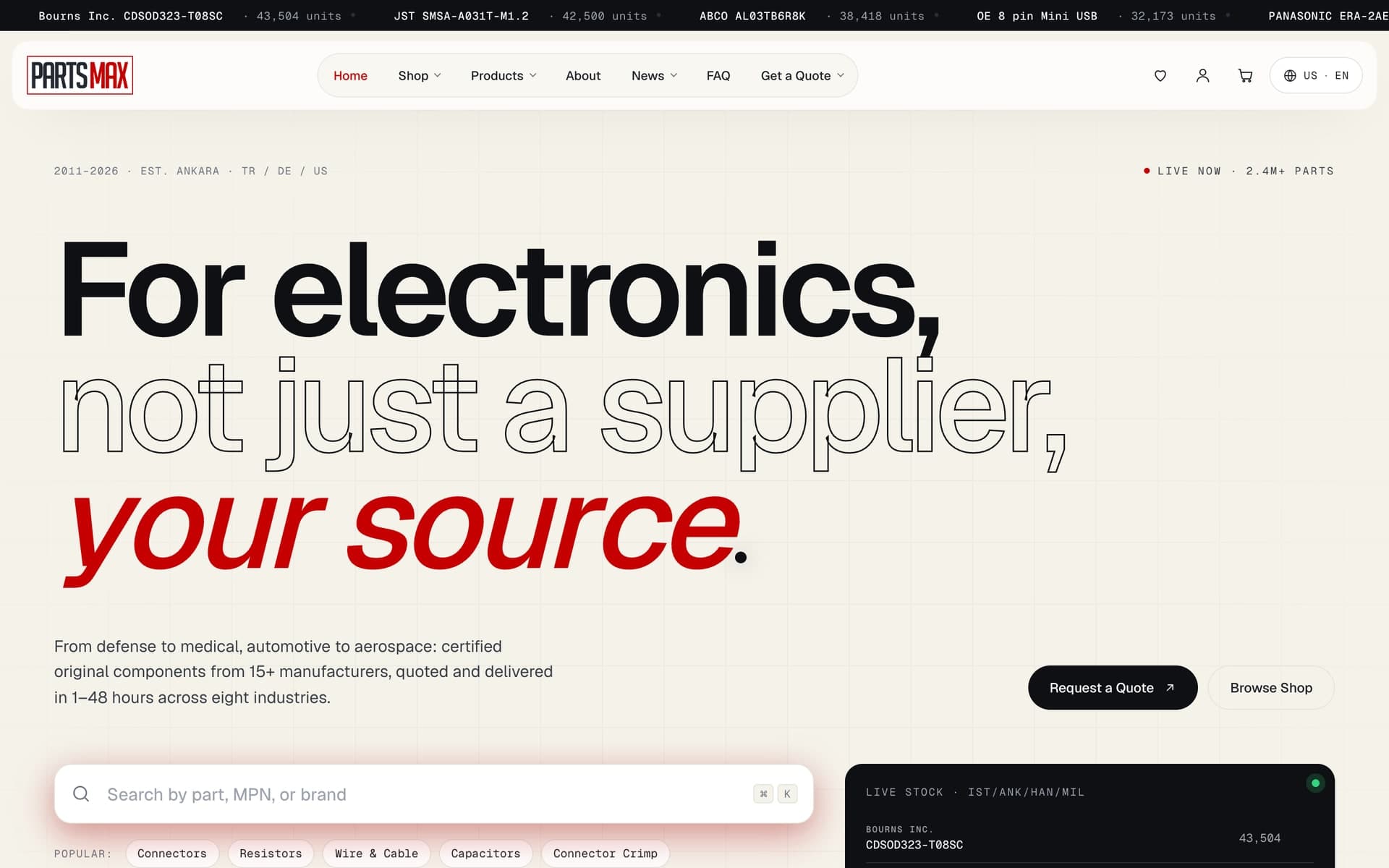
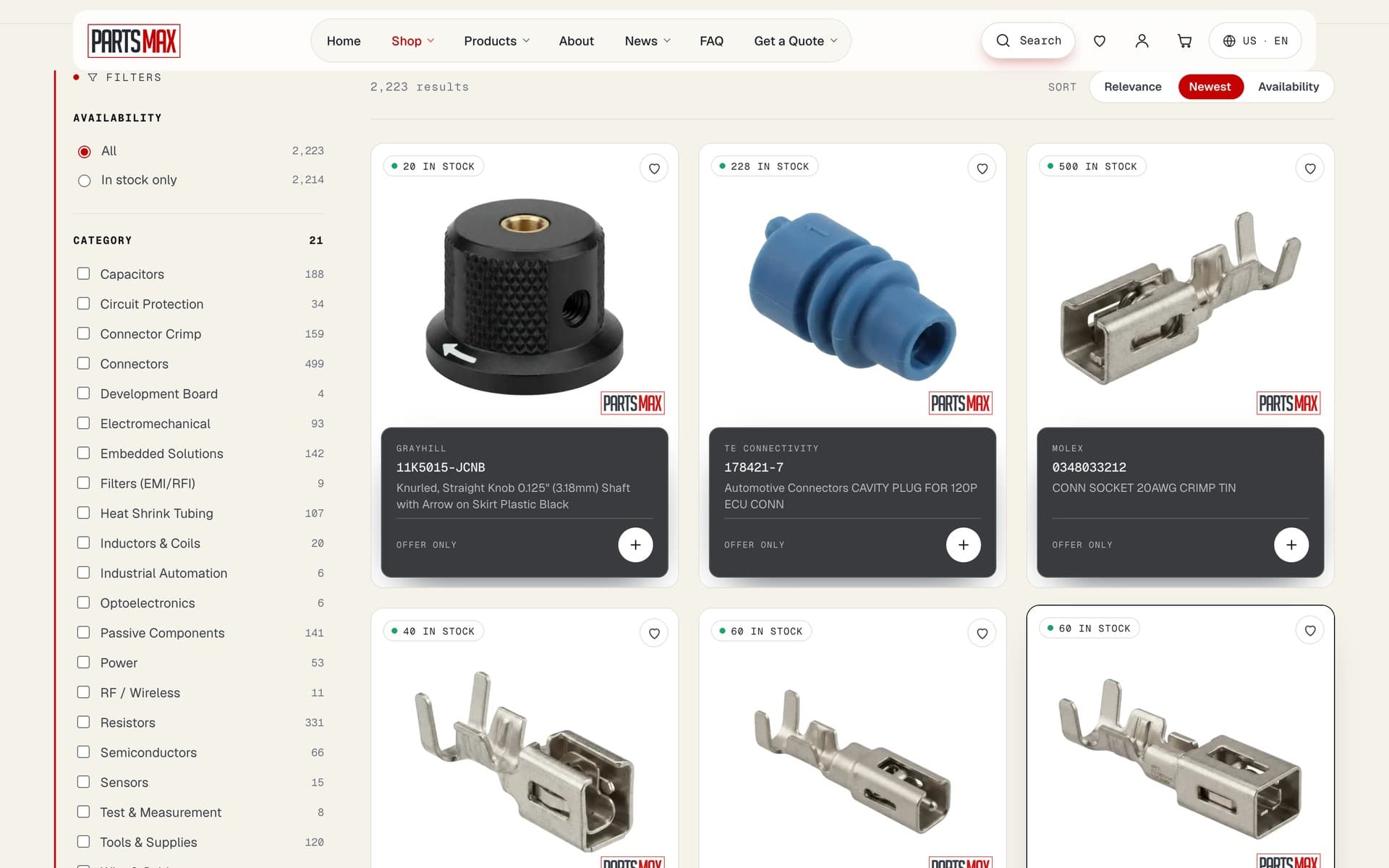
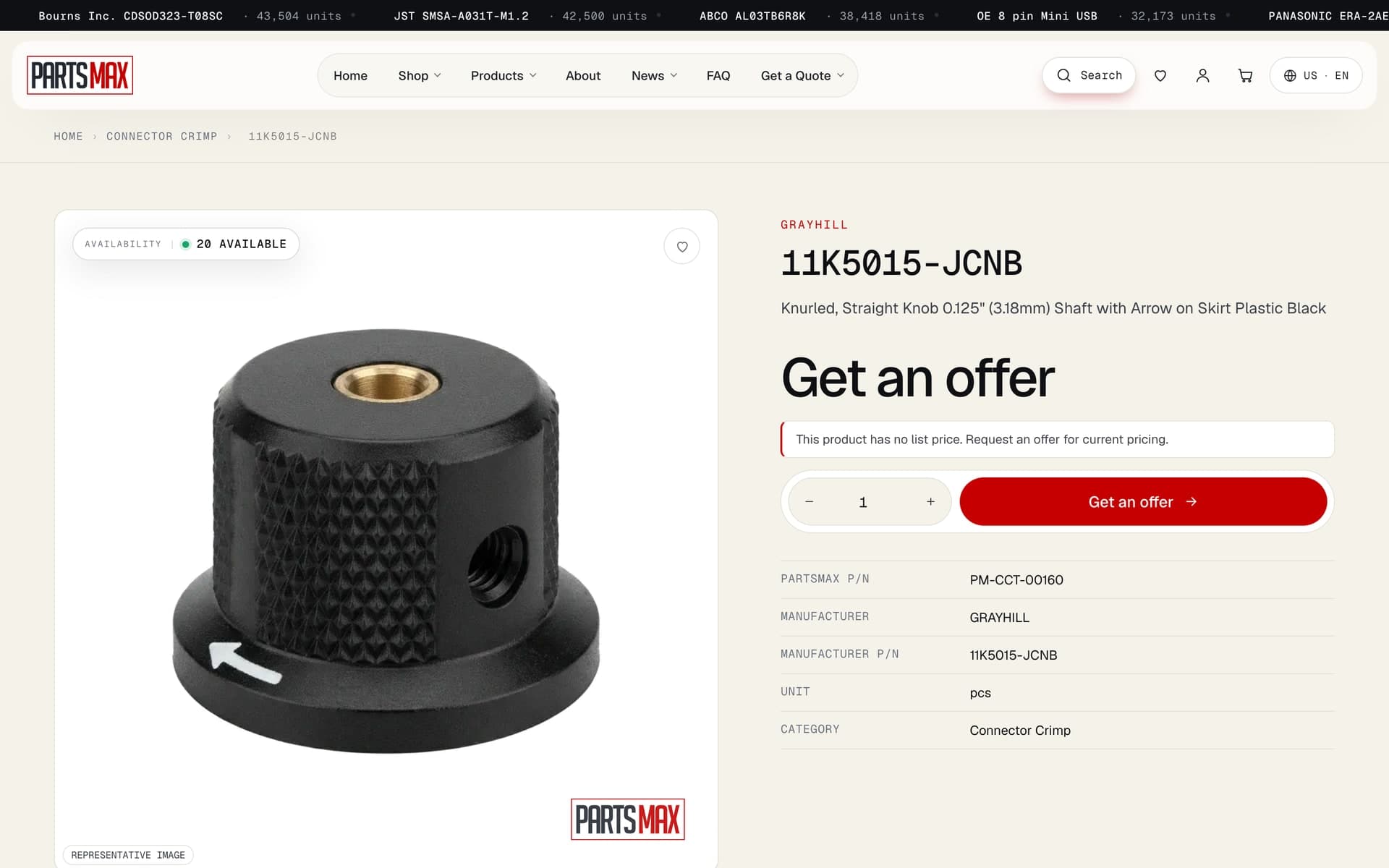
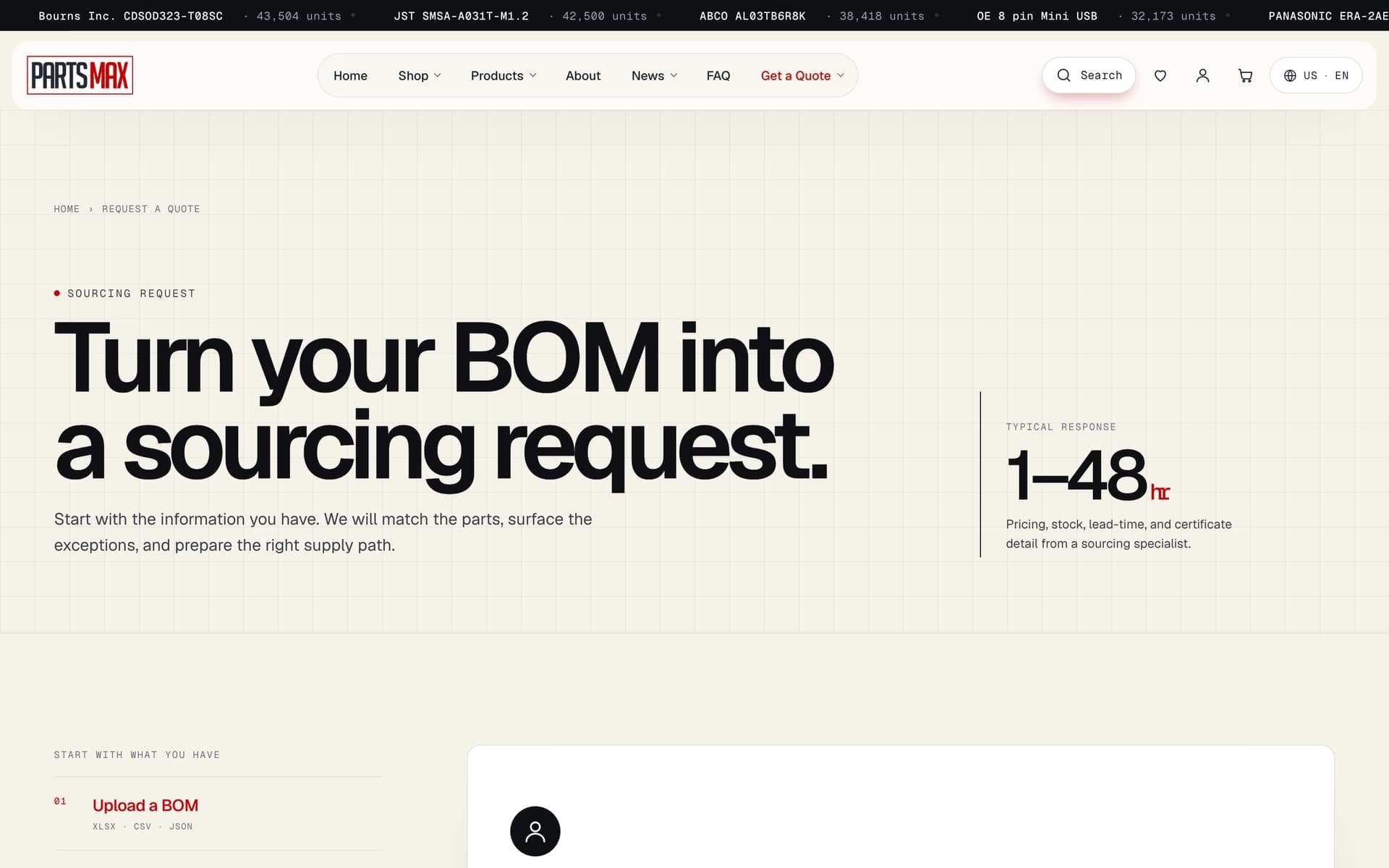
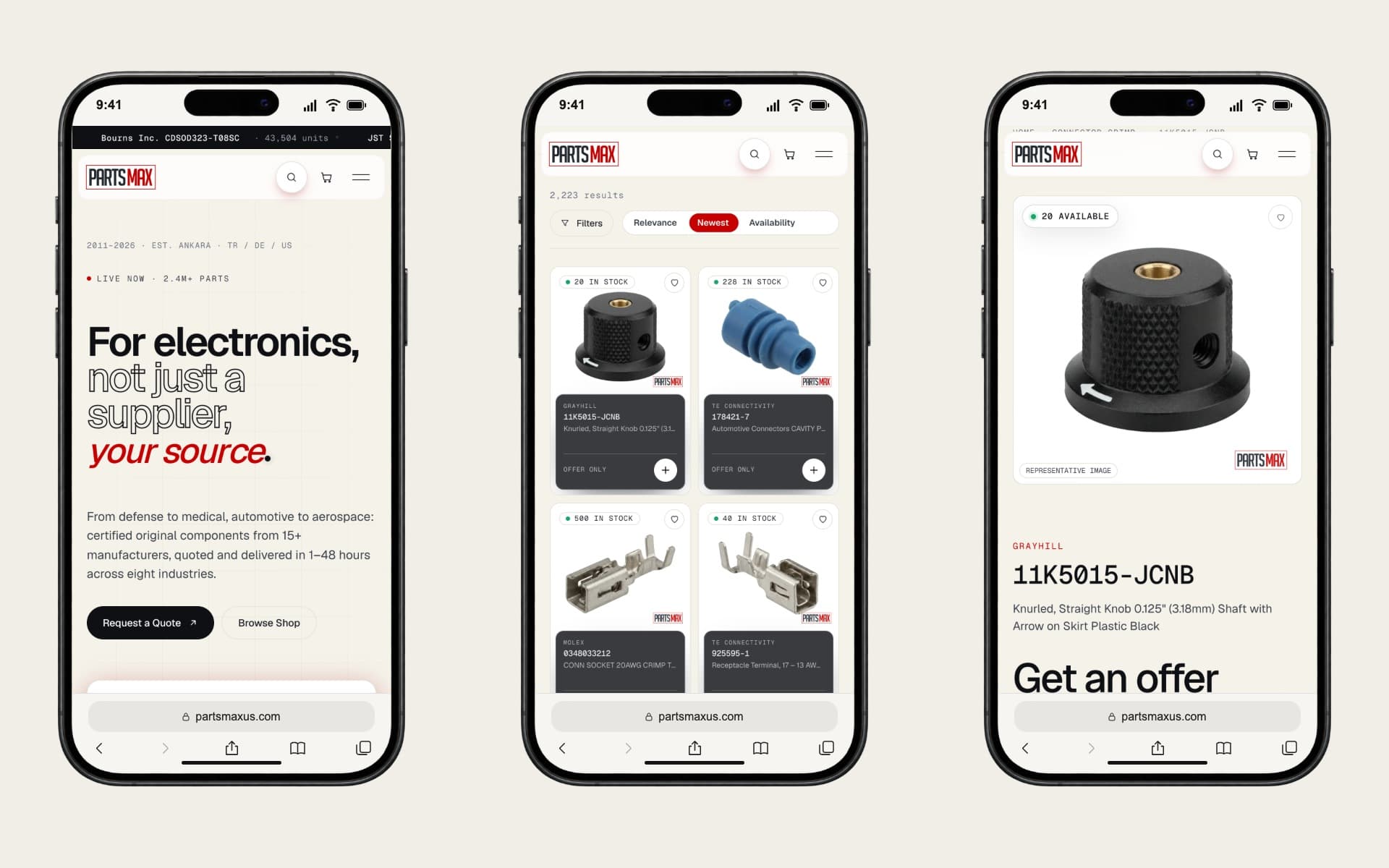
The live English storefront, with component search at the centre
Owning the whole platform
PartsMax supplies electronic components to industrial buyers. A buyer might arrive with one manufacturer part number or a bill of materials containing hundreds of lines. They need to find the right component, understand availability and send a sourcing request without losing the technical detail.
I took the platform from visual direction and architecture through the storefront, back office, databases and deployment. I continue to maintain it. The live sites serve Türkiye, Germany and the United States with Turkish, German and English experiences.
The interface puts component search and sourcing first. Large type gives the company a clear identity, while compact product cards and technical detail pages support the work buyers came to do. On phones, navigation, filters and product information adapt to the smaller screen.
Search built around part numbers
Searching for an electronic component is different from searching for a description. A precise manufacturer part number should lead to the precise component. Partial codes and imperfect spelling still need a useful route into the catalog.
I built PostgreSQL search that combines normalized exact matches, prefix matching, trigram similarity and full-text retrieval. Ranking gives exact identifiers priority, then considers similarity and availability. Indexed queries support the catalog filters and sorting.
That gives the platform a search strategy tied to its actual data. Product descriptions, categories and technical identifiers contribute differently, instead of being treated as one undifferentiated block of text.
From inventory to an offer
I built the ingestion and reconciliation workflows that keep the storefront aligned with the client's inventory. Database transactions and concurrency controls protect stock updates, while the back office gives staff a place to manage products and sourcing requests.
Buyers can browse components or upload a bill of materials in CSV, XLSX or JSON. The matching flow carries part numbers and requested quantities into the quote process. Accounts and saved lists support repeat sourcing, and the offer workflow handles the parts that need a commercial response from the team.
The commerce codebase includes hosted-payment and bank-transfer workflows, PDF invoice generation and an order lifecycle covering processing, shipping and delivery. I built stock reservations and settlement handling around database transactions, so order state and the platform's stock ledger stay consistent.
AI offer-composition architecture
Alongside the live commerce system, I completed the architecture for a multi-agent AI offer-composition engine. Its RAG design targets a corpus of 70,000 historical sales exchanges, retrieving relevant precedents to ground a new offer in the business's previous work.
The design combines PostgreSQL vector retrieval with separate offer-writing, response-writing and review stages. I designed a deterministic Python pipeline to coordinate the stages, with human approval before a draft reaches a customer. The evaluation design tracks output quality alongside latency, token usage and cost.
Operating what I built
I maintain the application, database migrations, inventory workflows and releases. Scheduled services run on Railway, including an AI-assisted catalog-media worker. The storefront runs on Vercel with previews for reviewing changes before production.
Technical SEO is part of the application: localized metadata, canonical URLs, language alternates, structured data and generated sitemaps. The same attention goes into the buying journey, from finding a component to sending a useful sourcing request.
Built with
- B2B commerce
- inventory reconciliation
- search relevance
- BOM matching
- international SEO
- Railway scheduled services
- RAG architecture
- multi-agent workflows
- vector retrieval design
- pgvector
- human review